HempCann Solutions Pvt. Ltd.
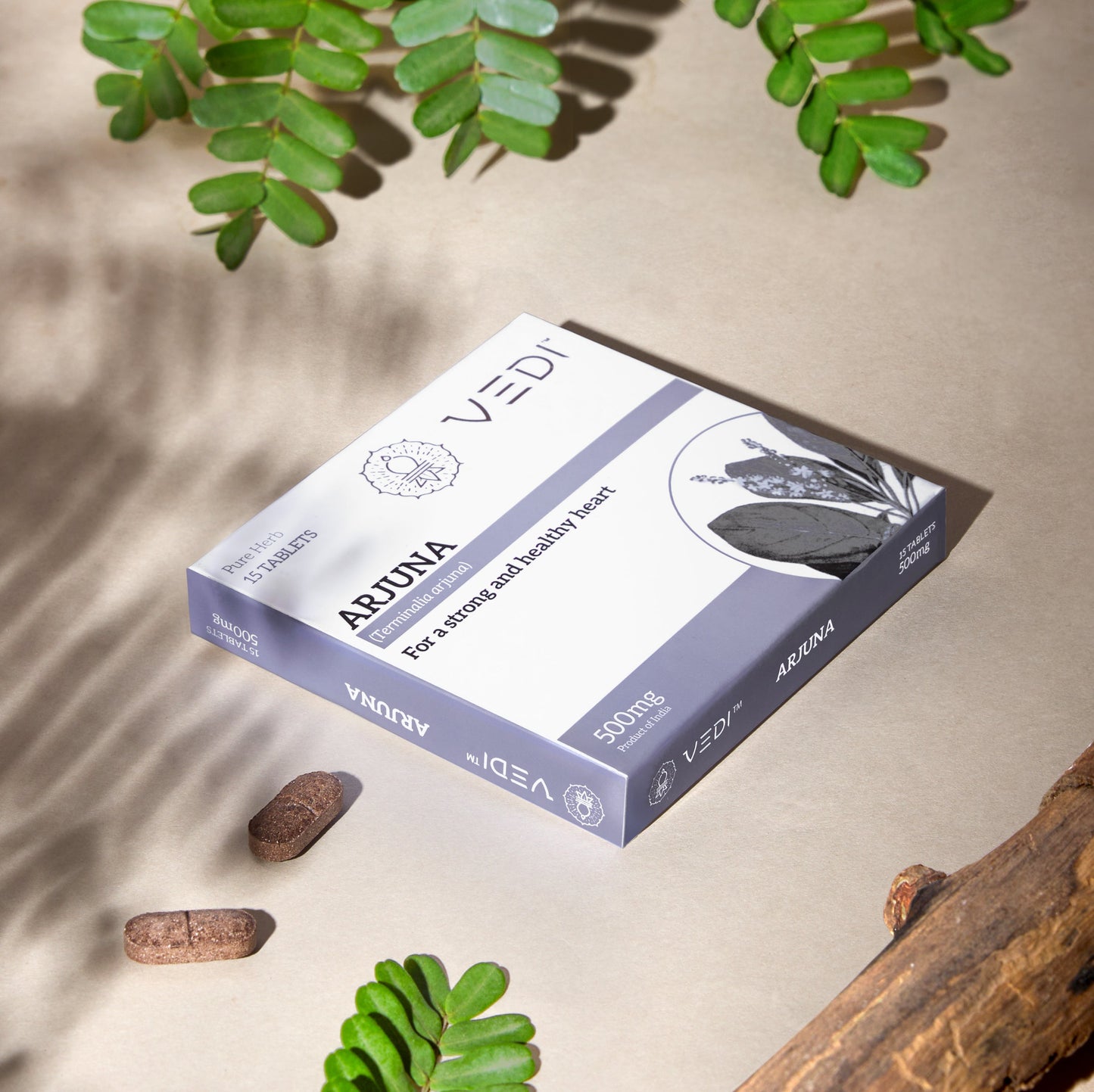
Arjuna Tablets for Heart Health – Natural Ayurvedic Supplement
Arjuna Tablets for Heart Health – Natural Ayurvedic Supplement
Couldn't load pickup availability
DESCRIPTION
Arjuna tablets are a powerful herbal supplement made from the Arjun tree bark, known for its cardio tonic properties. Effective in managing heart palpitation, angina, and poor circulation, these tablets are packed with active constituents like Triterpene glycosides, Arjunetoside, and Arjunolic acid. Ideal for supporting cardiovascular health and lowering cholesterol, these Arjuna Ayurvedic tablets are a must-have for maintaining heart wellness..
THERAPEUTIC BENEFITS
- Strengthens the heart muscle,
- Regulates heartbeat and reduces cholesterol.
- Prevents arteries from hardening and regulates blood pressure.
- Eases blood flow in the coronary artery and reduces chances of clot formation.
- As an anti-oxidant helps regulate blood sugar.
- Stops bleeding, reduces the frequency of urination (polyuria).
- Helps in managing leucorrhea because of astringent action.
- Protect DNA damage from toxins
Triterpene glycosides, Termiarjunoside I & II, Arjunetoside, Arjunolic acid
INGREDIENTS
Arjuna (Terminalia arjuna)
Each Tablet contains: Arjuna (Terminalia arjuna) bark extract: 500mg & Excipients Q.S.

ADDITIONAL INFORMATION
DOSAGE: One tablet twice a day after food or as directed by the physician .
CLINICAL STUDY
Chronic congestive heart failure
Twelve patients with refractory chronic congestive heart failure received arjuna bark extract (500 mg 8-hourly) or matching placebo for 2 weeks each, separated by 2 weeks washout period, in a double blind cross over design as an adjuvent to maximally tolerable conventional therapy(Phase I). Arjuna in compared to placebo, was associated with improvement in symptoms and signs of heart failure, improvement in NYHA Class, decrease in left ventricular end diastolic and end systolic volume indices.
Ref. Malik, N. et. al., Inhibitory effects of Terminalia arjuna on platelet activation in vitro in healthy subjects and patients with Coronary artery disease. Platelets, 2009, 20:183–190